显示标签为“plastic pill bottles wholesale”的博文。显示所有博文

2021年7月1日星期四

Performance comparison of HDPE bottles and PP bottles

 Both HDPE bottles and PP bottles are commonly used packaging for medicines. Both of these bottles can be used as packaging for solid and liquid medicines, but there are still certain differences between the two in terms of performance.


Performance comparison of HDPE bottles and PP bottles

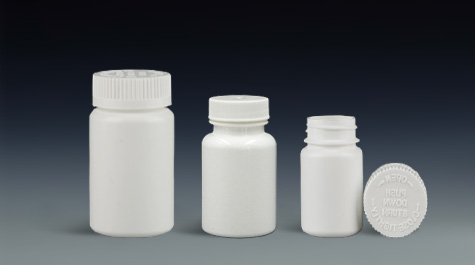
HDPE pills bottle


1. Heat resistance: relatively speaking, polypropylene bottles have higher heat resistance and can be sterilized at temperatures above 100°C, and will not be deformed at 150°C without external force. Terminal sterilization is generally required All will choose polypropylene bottles.

2. Low temperature resistance: The brittle temperature of high-density polyethylene bottles can generally reach below -50℃, and with the increase of relative molecular weight, the lowest can reach -140℃. Therefore, if the medicine needs to be used in a low temperature environment, it is still necessary to choose a polyethylene bottle as much as possible.


Performance comparison of HDPE bottles and PP bottles

50ml desiccant bottle


3. Aging resistance: The aging resistance of PP bottles is relatively weak. In terms of structure, polypropylene has a side branch composed of methyl groups, which is easy to be oxidized and degraded under the action of ultraviolet light and heat energy.

4. Flexibility: Although polypropylene bottles have high strength, they have poor toughness, while high-density polyethylene bottles have better toughness, so this material is also widely used in pipes, stretch strips, strapping, Wire and cable sheath, etc.

The above is the difference in performance between HDPE bottles and PP bottles. Both have their own advantages and disadvantages. However, in actual applications, in order to improve the various properties of the bottle, some additives will be added to ensure that the bottle can be better. Protect the safety of medicines.

What are the characteristics of the plastic tablet bottle

 Medicine bottle is an important form of pharmaceutical packaging. According to the different dosage forms of medicine, it is divided into liquid medicine bottle and tablet medicine bottle. Today we mainly introduce several characteristics of plastic tablet medicine bottle.


What are the characteristics of the plastic tablet bottle

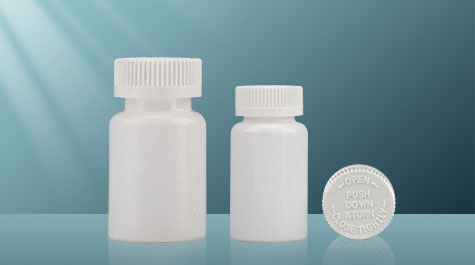
HDPE pill bottle


Tablet medicine bottles are mainly used to contain solid medicines such as tablets and capsules. Such preparations have good physical and chemical stability, low production and manufacturing costs, and are convenient to take and carry. But at the same time, this kind of medicine is also very afraid of moisture, and it is easy to deteriorate after being wet and cause the medicine to fail. Therefore, as a special packaging for solid medicines, the plastic tablet medicine bottle has the following characteristics:

1. Moisture resistance: In order to prevent the deterioration of solid drugs from moisture, the tablet medicine bottle needs to have good moisture resistance. The material of the bottle is generally selected from polyethylene, polypropylene and other materials that have good barrier properties to the external environment. The plastic tablets and bottles also produce a certain amount of moisture during the production process, so a desiccant is placed inside the bottle to absorb this moisture. To ensure the dryness of the drug storage environment and maintain the efficacy.

2. Convenience: In order to control the pouring dose of the liquid medicine, the bottle mouth is generally smaller, while the solid medicine is the opposite. In order to facilitate the taking of the medicine, the mouth diameter of the tablet medicine bottle is generally relatively large.

The above are the two basic characteristics of the plastic tablet medicine bottle. In addition, some medicines are easy to decompose when exposed to light. When choosing the packaging, a brown bottle is used to ensure the stability of the medicine during the validity period.

2021年6月9日星期三

Common problems of HDPE bottle blow molding

 HDPE bottles are commonly used packaging for capsules, oral liquids, tablets and other medicines. The quality of the bottle is of great significance to the efficacy of the medicine. In the process of blow molding, plastic bottles often encounter some quality problems. If these problems are controlled, the quality of the bottles will be more guaranteed.


Common problems of HDPE bottle blow molding

HDPE pill bottle


1. Some parts of the HDPE bottle will appear whitish and excessively stretched. This is due to the fact that the central temperature is too low or the pre-blowing is formed too early. This can be solved by controlling the temperature and the timing of the pre-blowing. problem.

2. There are wrinkles in the bottom of the bottle. If the bottom temperature is too high, the pre-blowing is too late, the pre-blowing pressure is too low or the flow rate is too small.

3. The bottom of the bottle is thick and thin at the top. This phenomenon is mostly caused by uneven baking or insufficient temperature at the bottom of the bottle.

4. The eccentricity of the bottom of the plastic bottle is related to the temperature of the plastic preform, stretching, pre-blowing, high-pressure blowing, etc. Reduce the temperature of the plastic preform, accelerate the stretching speed of the plastic bottle, check the gap between the tie rod head and the bottom mold, extend the pre-blowing time, and reduce the pre-blowing pressure. Or postpone high-pressure blowing to check whether the preform is eccentric.

5. High-density polyethylene bottles are also particularly prone to deformation. If the wall thickness difference between the longitudinal wall thickness position and the radial wall thickness position is too large, it is easy to deform. The shrinkage formed by the position of the parting line of blow-molded container products is more serious than that of the adjacent position, which is that the cooling rate of the thicker area is much slower than that of the surrounding area. Different cooling rates cause different shrinkage and deformation. This defect is best dealt with by controlling the longitudinal wall thickness and the radial wall thickness at the same time.

The above are the common problems in the blow molding process of HDPE bottles. According to the specific problems that arise, the corresponding solutions can be selected to ensure the quality of the bottles and better protect the safety of medicines.

2021年5月11日星期二

How to achieve aseptic requirements for high-density polyethylene bottles?

Medicine bottles are an important part of the circulation of medicines. The common pharmaceutical packaging is mainly plastic bottles and PTP aluminum foil, especially high-density polyethylene bottles, which can be used for the packaging of solid and liquid medicines. As a special commodity, medicine has high requirements for packaging, and sterility is the most basic condition. So, how can high-density polyethylene bottles meet the requirements for sterility?

Aseptic packaging is a method of sterilizing packaging in a sterile environment using instant ultra-high temperature sterilization technology. The sterile high-density polyethylene bottle can better maintain the ingredients of the medicine, extend the shelf life, inhibit bacterial contamination, and ensure the safety of medication. If the package contains bacteria, it will greatly shorten the shelf life of the medicine, seriously affect the efficacy of the medicine, and even cause a safety accident of the medicine. Therefore, the sterility of the drug package is the focus of the pharmaceutical companies.


How to achieve aseptic requirements for high-density polyethylene bottles

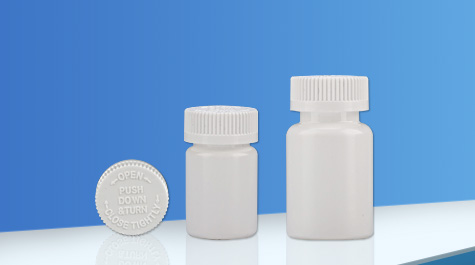
child proof bottle


The sterility of high-density polyethylene bottles must first be derived from the sterility of the production environment. According to GMP requirements, the production of pharmaceutical packaging materials must be completed in a clean workshop. The clean workshop has Pressure difference, illuminance, noise, etc. have strict standards. From the production process to sorting to packaging, they must be strictly controlled to ensure that the entire production process is carried out in a sterile space.

Secondly, high-density polyethylene bottles will undergo secondary sterilization after the production is completed. The main sterilization methods used are ethylene oxide sterilization or cobalt 60 sterilization to ensure that they meet the requirements of the industry standard for microbial limits ( Inspect according to law (Chinese Pharmacopoeia 2015 Edition General Rules 1105, 1106), the number of bacteria must not exceed 1000cfu per bottle, the number of molds and yeasts must not exceed 100cfu per bottle, and each bottle of Escherichia coli must not be detected).

It is not a separate action for high-density polyethylene bottles to achieve aseptic requirements. It needs to be strictly controlled from the production environment, packaging, sterilization and other links in order to achieve true sterility. With the substantial increase in the production standards of the pharmaceutical industry, the industry's requirements for aseptic packaging will become higher and higher.


2021年5月8日星期六

How to choose a manufacturer of medicinal HDPE pills bottles?

 Pharmaceuticals are necessities of people's lives. Plastic bottles for packaging capsules, powders and liquid preparations are usually called medical plastic bottles. High-density polyethylene bottles are the most widely used category. Pharmaceutical packaging material manufacturers on the market There are so many, how do pharmaceutical companies choose the right supplier?


How to choose a manufacturer of medicinal HDPE pills bottles

HDPE pills bottle


The quality of medicinal HDPE(high-density polyethylene) pills bottles is related to whether the drug can maintain good efficacy during the validity period. Choosing an excellent pharmaceutical packaging material supplier is a prerequisite for ensuring the quality of packaging. Generally speaking, manufacturers of pharmaceutical packaging need to have the following conditions and capabilities:

1. Certificate of medicine packaging material:

The certificate of pharmaceutical packaging materials is a basic requirement for a supplier of pharmaceutical packaging materials, and the number of certificates often determines the strength of the company. The certificate of pharmaceutical packaging materials refers to the "Registration Certificate for Pharmaceutical Packaging Materials." The Measures for the Administration of Pharmaceutical Packaging Materials and Containers (Interim) (Bureau Order No. 21) stipulate that "medical packaging materials must be registered by the drug regulatory authority and obtained the "Registration of Pharmaceutical Packaging Materials" It can be produced only after the certificate, and unregistered pharmaceutical packaging materials shall not be produced, sold, operated or used.

2. Clean workshop:

Medicine is a kind of special commodity, which has high hygiene requirements. As a supplier of pharmaceutical packaging, it is necessary to have a clean workshop. Only in this way can the medicinal high-density polyethylene bottles meet the hygienic standards and meet the requirements of medicinal packaging.

3. Production scale:

In addition to the certificate of pharmaceutical packaging materials and the clean workshop, the supply strength and scale of the pharmaceutical packaging material manufacturers cannot be ignored, which will determine whether the later packaging production line can operate normally and deliver on time.

Pharmaceutical companies can consider the above aspects when choosing a manufacturer of high-density polyethylene bottles for pharmaceuticals. In addition, they should also pay attention to factors such as the quality of the product itself.