显示标签为“effervescent tablet”的博文。显示所有博文

2024年6月23日星期日

Effervescent tubes: protectors of drug packaging

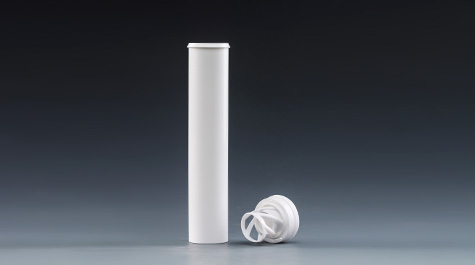
 As a common drug dosage form, effervescent tablets have their own unique packaging. As its special packaging, the effervescent tube is not only a container, but also a guardian of the drug. From material selection to design highlights, to production process and purchase guide, the effervescent tube plays an important role in the field of drug packaging.
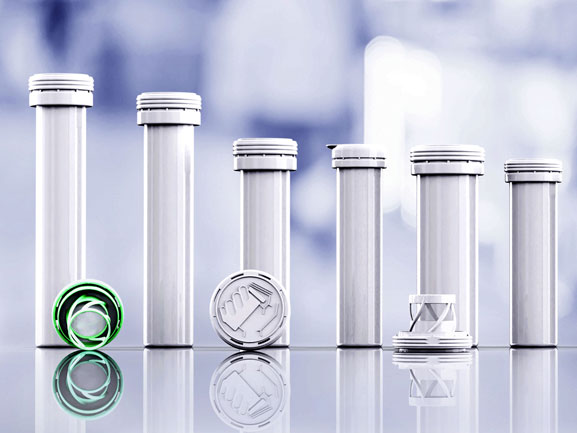

Effervescent tubes with spiral caps information

Effervescentt tablet packaging

1. Material and design:

The bottle body of the effervescent tube is made of polypropylene (PP), and the bottle cap is made of polyethylene (PE). The selection of this material takes into account the requirements of sealing and moisture resistance. The small medicine compartment on the bottle cap stores desiccant to ensure that the drug is not damp and deteriorated. At the same time, the anti-theft ring and spiral spring design increase safety and stability during transportation.

2. Desiccant and shelf life:

Desiccant plays a key role in the effervescent tube, but its shelf life also needs attention. Generally, the shelf life of the desiccant is two years, but it is affected by many factors, such as storage environment, packaging sealing, etc., which will affect its validity period.
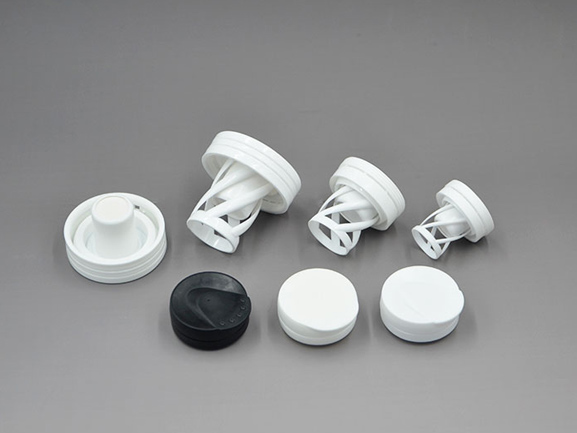
Requirements for the moisture content of the desiccant in the effervescent tube

caps for effervescent tube

3. Production process and quality control:

The production process of the effervescent tube adopts injection molding process, which ensures production speed and efficiency while also requiring strict quality control. The process links such as mold closing, filling, and pressure holding have a direct impact on the quality of the final product, and the strength and qualifications of the manufacturer are important considerations for selection.

4. Analysis of moisture-proof reasons:

If it is found that the inside of the effervescent tube is damp, it is necessary to analyze from the aspects of sealing, desiccant dosage and external environment. Good sealing and appropriate amount of desiccant are the key to preventing drugs from getting damp, and the humidity of the external environment will also affect the moisture-proofness of the packaging.

5. Purchase guide:

When choosing an effervescent tube manufacturer, you need to pay attention to its qualifications, strength and cost-effectiveness. Having the necessary production and business qualifications is a basic requirement, and the strength of the manufacturer is related to production equipment, process level and daily operation capabilities. At the same time, considering the cost-effectiveness, choosing a packaging solution that is both high-quality and economical and practical is the pursuit of pharmaceutical companies.

6. Printing method:

The printing method of the effervescent tube adopts thermal transfer printing, and the label content is directly printed on the tube body. Unlike traditional labeling, it is more in line with the needs of modern production, while ensuring the clarity and durability of the logo.

As an important part of drug packaging, the effervescent tube carries the mission of protecting drug safety. From material selection to design innovation, to exquisite production technology and purchase guidelines, every link affects the quality of drugs and patient safety. Therefore, it is very important for drug manufacturers and consumers to have a deep understanding of all aspects of effervescent tubes.

2022年11月1日星期二

Extractable matter testing of caps for effervescent tubes

 As an important part of the packaging, the cap of the effervescent tube is of great significance to the overall sealing and moisture resistance of the packaging. In addition, as the material in direct contact with the drug, the dissolution test must be carried out to ensure that the material does not contain ingredients that affect the safety and stability of the drug.


Requirements for the moisture content of the desiccant in the effervescent tube

144mm*29mm effervescent tube packaging


Requirements for the moisture content of the desiccant in the effervescent tube

caps for effervescent tube


In China, the standard implemented for effervescent tube caps is YBB00172004-2015 "Quality Standard for Oral Solid Medicinal Low Density Polyethylene Moisture-Proof Combination Caps". The dissolution test in the standard mainly includes three items: easy oxides, nonvolatiles and heavy metals Detection:

Accurately measure 20ml of water test solution for easy oxide, accurately add 20ml of potassium permanganate titration solution (0.002mol/L) and 1ml of dilute sulfuric acid, boil for 3 minutes, cool rapidly, add 0.1g of potassium iodide, and place in a dark place for 5 minutes. Titrate with sodium thiosulfate titration solution (0.01mol/L), when the titration is near the end point, add 5 drops of starch indicator solution, continue to titrate until it is colorless, and take another water blank solution and operate in the same way, both of which consume sodium thiosulfate titration solution. (0.01mo/L) The difference should not exceed 1.5ml.

Non-volatile matter Precisely measure 50ml of water, 65% ethanol, n-hexane test solution and blank solution, respectively, and place them in an evaporating dish with constant weight, evaporate to dryness in a water bath, and dry at 105 °C for 2 hours. The difference between the non-volatile residue of the test solution and the residue of the blank solution should not exceed 12.0 mg: the difference between the non-volatile residue of 65% ethanol and the residue of the blank solution should not exceed 50.0 mg: the difference between the non-volatile residue of n-hexane and the residue of the blank solution should not exceed 50.0 mg. 200.0 mg·

Heavy metals: Precisely measure 20ml of water as test solution, add 2ml of acetate buffer (pH3.5), and check according to the law (the first method of Chinese Pharmacopoeia 2015 edition general rule 0821), and the heavy metal content shall not exceed one millionth.

The dissolution test of effervescent tube caps is an important test item to ensure the quality of packaging. Xinfuda has been engaged in drug packaging for 20 years, and its products have passed ISO15378 certification, US DMF filing and other certifications. If you are choosing packaging for drugs, Welcome to contact us.

2021年2月22日星期一

Why are effervescent tablets contaminated and deteriorated

 Effervescent tablets are a new type of preparation that originated from abroad and has also been widely used in China in recent years. Due to the complex production process, high difficulty and high production cost, this formulation has very strict requirements on packaging. The effervescent tube must not only meet the basic moisture-proof and sealing requirements, but also consider the impact of various impact forces on the tablet during transportation.

No alt text provided for this image

effervescent tablet tube

The effervescent tube is a necessary part of the effervescent tablet to enter the market. If the effervescent tablet is contaminated and deteriorated, it is generally related to these factors of the effervescent tube. First of all, it depends on whether the effervescent tube is completely sealed. If the seal is not complete, external water vapor will invade the inside of the package, and the effervescent tablet has the characteristics of moisture absorption, which can easily cause deterioration of the preparation by moisture.

Secondly, the anti-drop performance of the packaging should be considered. This performance is mainly to prevent damage to the packaging and damage to the contents due to various external forces during the packaging, transportation, handling, and shelf circulation. The heavier the item, the higher the distance it falls, the higher the impact energy generated, and the higher the strength requirements of the packaging. The anti-drop performance of the effervescent tube can be tested as follows: the desiccant cap and bottle body are dropped at a height of 1 meter, the bottle cap is not broken, and the desiccant must not leak. Since the desiccant of the effervescent tube is generally placed in the cap, if the desiccant leaks, the silica gel and the molecular sieve will directly contact the drug, which will cause pollution to the effervescent tube.

Pharmaceutical packaging is a very rigorous industry, and any one of the packaging testing failures will have a certain impact on the drugs, and even affect the health of patients. When selecting effervescent tube suppliers, manufacturers of effervescent tablets should strictly examine their product quality and production qualifications to ensure drug safety.

2020年12月10日星期四

Effervescent tablet tube sizes


Effervescent tablet tube sizesAs a special medicine, effervescent tablets play an important role in national health. For effervescent tablets to maintain good efficacy and stability, a suitable packaging is essential. When purchasing effervescent tablet tubes, many people often only pay attention to the moisture-proof and tightness of the packaging. As everyone knows, the choice of bottle size is also important. It is related to whether the tablets can be stored well.
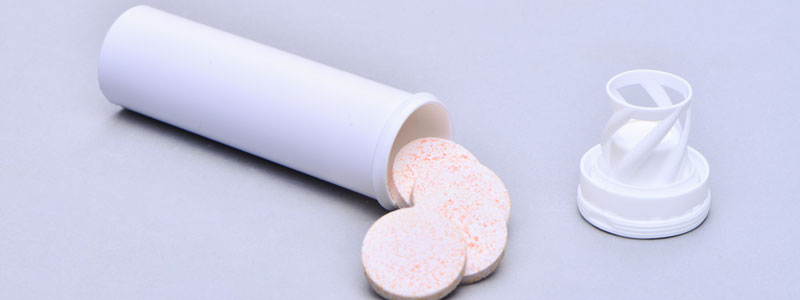
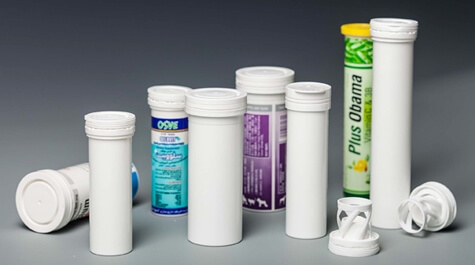
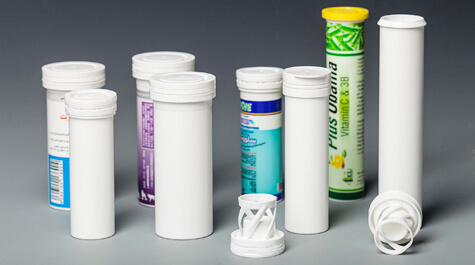
Common effervescent tablets have a diameter of about 27mm. When choosing an effervescent tablet tube, it is generally most suitable for the bottle diameter to be larger than the tablet diameter by 2mm. If the diameter is too large, tablets are prone to shaking, and too small a diameter is not conducive to filling. The height of effervescent tablet is generally 6mm-7mm, and the height of effervescent tablet tube is 84mm96mm99mm, 133mm, 144mm and other sizes. The number of effervescent tablets that can be accommodated in different heights is different. Pharmaceutical companies need to meet their own needs. Choosing the right size is critical to whether the cap of the effervescent tube can play its role.

The lid of the effervescent tube is generally made of low-density polyethylene, which has good toughness and resistance to many organic solvents. The lid is equipped with a spiral spring, which is soft and shrinkable. When the lid is closed, the spring exerts a certain pressure on the tablet downward, which plays a role of shockproof, pressure resistance and sealing, and can well buffer the impact during transportation. Ensure that the tablets in the bottle do not shift or shake, so as to maintain the integrity of the effervescent tablet.

It is worth noting that the total height of the medicine after filling the effervescent tablet needs to achieve a good fit with the spring on the cap of the effervescent tablet tube. If the distance is too large, the spring cannot play its due role, and the distance is too small. Too much pressure can easily crush the effervescent tablet. Only a proper distance can prevent the effervescent tablet from shaking due to external forces such as vibration and squeezing during transportation, resulting in damage to the effervescent tablet.

Pharmaceutical packaging is a medium for communication between pharmaceutical companies and consumers, and a silent promotion. Appropriate packaging must not only meet its basic functions such as storage, moisture-proof, and sealing, but the choice of packaging size is also important for the storage of medicines. With the continuous advancement of science and technology, people's attention to health and environmental awareness are increasing, and environmental protection, safety and humanization have become the future development trend of pharmaceutical packaging.


2020年11月22日星期日

Effervescent tablet disintegration time limit inspection method

 Effervescent tablet disintegration time limit inspection method

effervescent tablet tubes

The disintegration time limit inspection method is used to check the disintegration of oral solid preparations under specified conditions.

Disintegration means that the oral solid preparations disintegrate and dissolve or break into granules under specified conditions. Except for insoluble coating materials or broken capsule shells, they should all pass through a screen. If there is a small amount that cannot pass through the screen, but has been softened or lightly floated and has no hard cores, it can be considered as compliance.

Inspection method: Hang the hanging basket on the support through the stainless steel shaft at the upper end, immerse it in a 1000ml beaker, and adjust the position of the hanging basket to lower it to a low point. When the screen is 25mm from the bottom of the beaker, the temperature inside the beaker is 37℃±1℃ Adjust the water level to make the screen 15mm below the water surface when the basket rises to the high point. The top of the basket cannot be immersed in the solution.

Unless otherwise specified, take 6 pieces of the test product and place them in the glass tubes of the above-mentioned hanging basket. Start the disintegration instrument for inspection. Each piece should be completely disintegrated within 15 minutes. If one tablet fails to disintegrate completely, another 6 tablets should be taken for retesting, all of which should meet the requirements.

Take 1 effervescent tablet and place it in a 250ml beaker (with 200ml of water at a temperature of 20℃±5℃), that is, many bubbles are released. When the gas around the tablet or fragments stops escaping, the tablet should dissolve or Dispersed in water, no aggregated particles remain. Except as otherwise specified, 6 tablets shall be inspected by the same method, and each tablet should disintegrate within 5 minutes. If one tablet fails to disintegrate completely, another 6 tablets should be taken for re-testing, all of which should meet the requirements.

2020年11月8日星期日

Desiccant in effervescent tablet packaging


Desiccant in effervescent tablet packaging

Do you know the desiccant in effervescent tablet packaging types? Desiccant is used for medicines, foods are moisture-proof and mildew-proof. Commonly used desiccants can be classified into physical adsorption desiccants and chemical adsorption desiccants. Silica gel desiccants in physical adsorption desiccants meet the US FDA standards and are verified to be free of human body. Silica gel desiccants physically adsorb water molecules in their structures.

The desiccant in the cap of effervescent tubes rarely uses a chemically adsorbed desiccant. Commonly used desiccants for chemical adsorption include quicklime, magnesium chloride, calcium chloride, soda lime, phosphorus pentoxide, etc., absorbing water molecules to change their chemical structure and become another substance. Molecular sieves are another commonly used desiccant. The molecular sieve is a crystalline silicate or aluminosilicate, which is a channel and cavity system formed by a silicon oxytetrahedron or an aluminoxy tetrahedron connected by an oxygen bridge. It can be divided into pore size by high-efficiency desiccant, selective adsorbent, catalyst, ion exchanger, etc. The molecular sieves with pore size less than 2nm, 2-50nm and greater than 50nm are called microporous, mesoporous and macroporous molecular sieves, respectively.

2020年11月4日星期三

what's in the cap of effervescent tablet tubes

 We often drink effervescent vitamin c tablets to improve our health, do you care of the cap of the tube, there is a small conntainer in the cap, so what's in it? The effervescent tablet can react with moisture of air,so the effervescent tube must have desiccant to control the environment of bottle inside. In generally, desiccant use silica gel or molecular sieve.


what's in the cap of effervescent tablet tubes

effervescent tablet tubes


First,i will introduce the silica gel and molecular sieve.


Silica gel

Silica gel is an amorphous and porous form of silicon dioxide (silica), consisting of an irregular tridimensional framework of alternating silicon and oxygen atoms with nanometer-scale voids and pores. The voids may contain water or some other liquids, or may be filled by gas or vacuum.Silica xerogel with an average pore size of 2.4 nanometers has a strong affinity for water molecules and is widely used as a desiccant. Silica gel's high specific surface area (around 800 m2/g) allows it to adsorb water readily, making it useful as a desiccant (drying agent). 

Silica gel is silicon dioxide (SiO2). It is a naturally occurring mineral that is purified and processed into either granular or beaded form. As a desiccant, it has an average pore size of 24 angstroms and has a strong affinity for moisture molecules. The silica gel will pull in moisture at temperatures up to 220°F (105°C). As temperature goes above 100°F, the rate of moisture pickup will slow down but the silica gel will still work.

Silica gel performs best at room temperatures (70° to 90°F) and high humidity (60 to 90% RH) and will drop the relative humidity in a container down to around 40% RH. In the United States, silica gel is commonly used in food and pharmaceutical applications as only silica gel has been approved by the FDA for direct contact with these items.

As with clay, silica gel, with its wide range of pore sizes, has the capability of adsorbing compounds other than water. The relative order of adsorbability is: water, ammonia, alcohols, aromatics, diolefins, olefins and paraffins. When the potential for multicomponent adsorption is present, expect the more strongly adsorbed compounds, such as water, to displace the more weakly held ones.


what's in the cap of effervescent tablet tubes

desiccant cap

Molecular sieve

molecular sieve is a material with pores (very small holes) of uniform size. Molecular sieves are synthetic porous crystalline aluminosilicates which have been engineered to have a very strong affinity for specifically sized molecules. The definitive feature of the molecular sieve structure, as compared to other desiccant medias, is the uniformity of the pore size openings.

There is no pore size distribution with molecular sieves, as part of the manufacturing process the pore size on the molecular sieve particles can be controlled. The most commonly used pore size is 4 angstroms (4A) although 3 angstroms (3A), 5 angstroms (5A) and 10 angstroms (13X) are available. This distinctive feature allows for the selection of a molecular sieve product which can adsorb water vapor yet exclude most other molecules such as volatile organic compounds (VOCs) which may or may not be present in the package.

The selective adsorption characteristics of molecular sieves can be useful when it is necessary to dry a package or environment without removing other desirable compounds within the system. Molecular sieve can trap water vapor to temperatures well past 225°C in some cases, and due to its high affinity for water vapor, molecular sieve is able to bring the relative humidity (RH) in environments down to as low as 1% RH.

In Europe molecular sieve is used in pharmaceutical applications. In the United States it is often the desiccant of choice for pharmaceuticals and bio-chemicals and/or reagents. Although molecular sieve is sligthtly higher in cost per unit due to its extremely large range of adsorptive capabilities and high capacity at low relative humiddity it is often the best value.